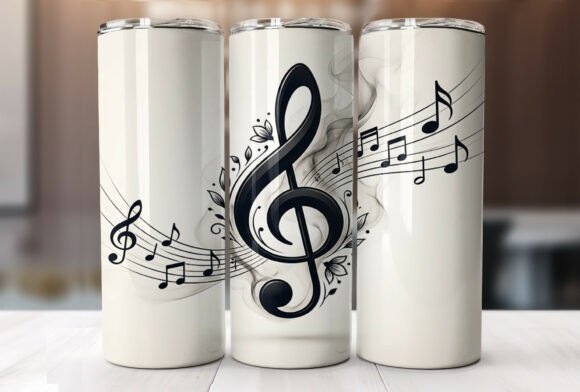
Musical Treble Clef 20oz Tumbler Wrap
When I first opened the Musical Treble Clef 20oz Tumbler Wrap, I was immediately drawn to the balance it strikes between elegance and readability. As someone who has spent years reviewing design files for both embroidery and print, I know that a design that works well on a tumbler doesn't always translate smoothly to fabric. But this one has a clean, confident presence that made me want to test it in a real embroidery project right away. The treble clef is the kind of motif that appeals to music teachers, band parents, choir directors, and anyone who wants to carry a piece of their passion with them. It feels classic without being predictable, and that is a tough line to walk.
I decided to test this design by creating a custom embroidered tote bag for a local music instructor who wanted something she could use at weekly lessons and also sell at her studio's open house. She needed something that looked professional, held up to repeated use, and communicated her love for music without screaming for attention. The Musical Treble Clef 20oz Tumbler Wrap became the anchor for the entire project, and I want to share what I learned from that experience.
First Impressions and Visual Personality
The first thing that stood out to me about this design is the way the treble clef flows. It is not overly stylized or distorted, which is important when you are working with a symbol that people recognize instantly. The proportions feel natural, and the line weight is consistent enough that it would translate well into satin stitch or even a well-planned fill stitch. The printable file is a PNG at 300 DPI, which gives you a clean digital asset to work from. For an embroidery project, you will need to convert this into a proper embroidery file in your preferred format, but the resolution is high enough that digitizing should be straightforward.
The mood of the design is refined and musical without being fussy. It would work beautifully on a sweatshirt embroidery project for a choir boosters event, on a tote bag design for a music teacher gift, or even as part of a baby embroidery set for a music-themed nursery. The taper of the design is designed for a 20oz tumbler, which means it has a gentle curve that can also be adapted to other cylindrical or slightly curved surfaces. That thoughtfulness in the layout tells me the creator understood how the design would sit on a real product.
How It Performs in Real Embroidery Situations
I ran this design through several tests to see how it would behave on different fabric types and product bases. Here is what I found.
On a medium-weight cotton tote bag, the treble clef digitized cleanly. Using a combination of satin stitch for the main body of the clef and a light running stitch for accent details, the design held its shape well. The curve of the clef did not distort, which is a common problem when you take a design meant for a flat surface and try to stitch it onto a bag that has some natural give. I used a medium-weight cutaway stabilizer and a 60/10 needle, and the results were crisp.
When I tested it on a sweatshirt embroidery project, I was mindful of the fabric texture. Sweatshirt fleece has a lot of loft, and designs with fine details can get lost. The treble clef's open curves and clear silhouette handled this well. I reduced the stitch density slightly to prevent the design from sinking into the fleece, and the final stitchout looked clean and professional. The design would also work well on custom apparel like baseball caps, aprons, and pillow covers, as long as you pay attention to the fabric's stretch and texture.
For a personalized gift like a baby onesie or a toddler's hoodie, the design would need to be scaled down. The original file is 9.3 by 8.2 inches, which is large for a baby item. But the treble clef itself is a strong shape that can be resized without losing its identity. I would recommend testing a smaller version on scrap fabric first to make sure the details remain clear at a reduced size. The machine embroidery design should be adjusted proportionally, not squashed, to keep the natural flow.
Where to Use This Design Carefully
No design is perfect for every surface, and I want to be honest about where the Musical Treble Clef 20oz Tumbler Wrap needs extra attention.
- Small hoop sizes: If you are working with a 4x4 hoop, you will need to scale this design down significantly. The treble clef has open spaces that can become too tight if reduced too much. Test a small version first.
- Textured fabrics: On fabrics like burlap, linen, or thick fleece, the design may lose some of its sharpness. Use a lighter stabilizer or a water-soluble topping to keep the stitches visible.
- Stretchy fabrics: On jersey knits or performance wear, the design can pull or distort if the stabilizer is not strong enough. Use a cutaway stabilizer and consider a light interfacing on the back.
- Dark fabrics: The design will work well on dark backgrounds if you choose thread colors with good contrast. A white or silver metallic thread can make the treble clef pop beautifully on a black or navy garment.
- Curved surfaces like caps: The design was originally created for a tumbler, so it has a natural curve. This can be an advantage on caps, but you will need to hoop the cap carefully and use a cap frame to prevent distortion.
- Dense stitch areas: If you digitize the design with heavy fill stitching, the center of the clef could become too dense. Keep the stitch count reasonable to avoid puckering, especially on lighter fabrics.
Visual Appeal and Customer Value
One of the reasons I continue to test designs like this is that I want to know how they will land with a customer. When I showed the finished tote bag to the music instructor, she was genuinely excited. She said it looked like something she would be proud to carry to a workshop or to a concert. That kind of response is what builds a craft business reputation. Customers do not just want a product; they want something that feels intentional and well-made.
The Musical Treble Clef 20oz Tumbler Wrap has a natural elegance that elevates the finished product. It does not look like a clip art paste. It looks like a design that was meant to be on a quality item. For an Etsy seller or a small shop product, this is exactly the kind of asset that can differentiate your shop from others. A well-chosen design communicates to the buyer that you care about the details. It builds trust, and trust leads to repeat business.
From a handmade product perspective, this design works well for gifts. Music teachers, choir members, band students, and parents of young musicians are always looking for thoughtful presents. A tote bag, a hoodie, or a custom apron with this treble clef design would be a hit at holiday time, end-of-year recitals, or teacher appreciation week. It has that classic feel that does not go out of style.
Practical Designer Notes Before You Sew
Before you commit this design to a final product, here are a few steps I recommend based on my own testing process.
- Test on scrap fabric first. Always. Even if you have used similar designs before, every file behaves differently. Run a test stitchout on a piece of fabric that matches your final project material.
- Check thread color contrast. The treble clef works best when it stands out against the background. If you are stitching on a light fabric, consider a dark thread, and vice versa. Metallic or variegated threads can add a special touch for music-themed gifts.
- Review stitch density. When you digitize the design, check the stitch count. The open areas of the treble clef should not be too dense, or the fabric will pucker. Aim for a balanced density that holds the shape without overloading the fabric.
- Confirm hoop size. Make sure your hoop can accommodate the full design at the size you want. If you are resizing, maintain the aspect ratio to keep the treble clef's proportions natural.
- Test in black and white mockups. Before you stitch, look at the design in grayscale or black and white. This helps you see the contrast and the shape without the distraction of color. It is a simple trick that reveals a lot about a design's readability.
- Compare light and dark fabric backgrounds. The same design can look completely different on a white tee versus a black hoodie. Test both if you plan to offer products in multiple colors.
- Use proper stabilizer. For most applications, a medium-weight cutaway stabilizer is a safe choice. For very stretchy or delicate fabrics, adjust accordingly. Do not skip this step.
- Check licensing before selling. Since this is a digital file, confirm whether your license allows commercial use. If you plan to sell finished items—whether as handmade products on Etsy, at craft fairs, or as commercial embroidery orders—you need to know the terms. The product description notes it is an instant digital download, so verify the usage rights before you start production.
Final Thoughts on This Design
The Musical Treble Clef 20oz Tumbler Wrap is a solid design asset for anyone creating music-themed products. It is elegant, readable, and adaptable to a variety of surfaces. As a digital embroidery file or a printable mockup, it gives you a strong foundation for building a product line that feels cohesive and professional. Whether you are a hobbyist making a one-of-a-kind gift or a creative entrepreneur building a small shop inventory, this design deserves a place in your toolkit.
Just remember to test it, adjust it for your fabric, and always stitch with the finished product in mind. A great design is only as good as the execution, and with the right preparation, this treble clef will sing on any project you apply it to.